Thursday, March 10, 2022

Tasha's Cauldron of Everything - Dungeons and Dragons 5E (read for fun)

I was really excited to read this one.

I picked it up because I heard that it did interesting things with character creation, and that it provided a leg up for the Ranger core class. It does all this and more. First, character creation. 

Lots of options here for customization. Unlike previous books, which provided generators and tips for adding flavor, there are numerous mechanical options here. When I heard that TCoE would allow players to mix and max race options, I was afraid that it would open the door to illogical powergaming, without respect to lore. While powergaming is definitely an option, as it always is, the lore is still intact. For instance, if you wanted to build a wizard in the past, then it was recommended to go High Elf, Tiefling or Human to get a bonus to Intelligence. A dwarf wizard would always be inferior for lacking that, which discouraged roleplay possibilities. Now, with TCoE, a player can officially state that "my dwarf character was more studious than other dwarves, and so he is more intelligent, but he's not quite as hardy as other dwarves." There is no official way for non-dwarves to get explicitly dwarfish racial abilities, like their poison resistance, so that is reassuring. 

Also on the same subject, is the idea of changing class features and even archetypes mid-campaign. I'm a dungeon master, and so I've had my share of players who want to change things up about their character or even start a new character. I've struggled to find ways to accommodate those requests within the story. Again, I'm a lore guy. I want to keep things consistent and make sure that those things have an in-universe and lore-based reason. This book helps with that by providing mechanical ways to allow and, at the same time, regulate character changes. It also has fun lore-based reasoning examples. 

Next is the Ranger core class update. All the classes received new archetypes or other options, but the Ranger is the only one that got a total overhaul. Seriously, these aren't additional features so much as they are replacement features. I understand that there is some disappointment over how the official overhaul isn't as powerful as the Unearthed Arcana, but I feel that is to be expected. In my experience, UA is always really powerful and then it gets toned down for official rules after playtesting. 

Finally, Sidekicks. The last thing in my review is going to be about the rules for sidekicks. I'd like to do more, but I'm trying to keep this review short (ish).  Sidekicks/pets/etc. have long been on the fragile end in 5E. There's a lot of roleplay potential in them, and interesting character build options for them, but they're only viable at the lower levels. These new rules make them more viable, because they can level up with the PC and gain other benefits. I say this from a place of experience. In my home game, a player befriended a pseudo-dragon, and I used these rules to make the tiny creature less squishy. 

Trickster Eric Novels gives "Tasha's Cauldron of Everything " an A+


Click here for my next book review: The Irregular at the Magic High School - light novel volume 1

Click here for my previous book review:   The Trials of Apollo - the Hidden Oracle (read for fun)

Brian Wilkerson is an independent novelist, freelance book reviewer, and writing advice blogger. He studied at the University of Minnesota and came away with bachelor's degrees in English Literature and History (Classical Mediterranean Period concentration).

His fantasy series, Journey to Chaos, is currently available on Amazon as an ebook or paperback.

Sunday, March 6, 2022

The Trials of Apollo - the Hidden Oracle (read for fun)

God of Prophecy, save the future! Literally, your oracles aren't functioning. 


I picked up this book at a book sale hosted by my local library. It sounded interesting. I haven't read the other Percy Jackson books. All I know of the series is from Pop Culture Osmosis. So I was unaware that two series preceded this book, and that made for a fun experience. 

I didn't feel lost at all. The author did a great job on adding relevant info from previous books without being exposition heavy about it. Evidently, the premise of this book, the god Apollo being punished with mortality, is a direct result of the outcome of the previous series, The Heroes of Olympus. So there are a lot of Late Arrival Spoilers. That is not a problem from my perspective.

 It actually made me interested in going back to those earlier books and learning the full story of the snippets. Like what happened with Leo and why he's wandering a sea of monsters and some such. Basically, the past books are treated...casually, for lack of a better word. They're like fun pieces of series lore. What you need to know for this particular series is presented neatly. For fans of the series, I imagine they are fun call-backs. 

Apollo himself is the first-person narrator, and he is obnoxious. He is prideful, self-centered, and doesn't like taking responsibility for things etc. However, the narration itself is fun to read. It's lively and comical. While full of himself, Apollo is, I wanna say, "harmless". The times that he was malicious are played up, like that satyr he flayed or the cyclops he killed, but in this story, Apollo is not mean to other people, not even in pursuit of his own goal. It is more like he is thoughtlessly selfish.  Thankfully, he gets a good dose of character development. It helps that three of his demi-god children are part of the cast. They bring out the best in him. 

The plot in this book is essentially Apollo traveling to Camp Half-Blood, learning of the situation with the Oracles (because the God of Prophecy wasn't paying attention to them), and finding a solution. That solution being a "hidden oracle", as the book's subtitle suggests. None of the characters know how to go about doing that, and what moves the plot forward appears to be prophetic dreams that Apollo receives from SPOILER. And Zeus. At many times in the story, Apollo suspects that Zeus is mucking with his memory to hide certain knowledge from him, and only allowing him certain godly power at certain times. It makes me think that Zeus has some sort of In Mysterious Ways kind of plan. 

It was a fun book to read, and its has its serious moments too. 

Trickster Eric Novels gives "The Trials of Apollo -  The Hidden Oracle" an A+


Click here for my next book review:  Tasha's Cauldron of Everything - Dungeons and Dragons 5E

Click here for my previous book review:   No Game No Life volume 6 (read for fun)

Brian Wilkerson is an independent novelist, freelance book reviewer, and writing advice blogger. He studied at the University of Minnesota and came away with bachelor's degrees in English Literature and History (Classical Mediterranean Period concentration).

His fantasy series, Journey to Chaos, is currently available on Amazon as an ebook or paperback.

Sunday, February 27, 2022

No Game No Life volume 6 (read for fun)

This is an intense volume.  That is because its story is the final days of The Great War. Yes, that terrible and seemingly endless conflict in Dishboard's ancient history, which gave rise to Tet's ascension as the One True God, is the subject of this volume. 

It is just as bad as everyone in the present says it was. I have to give the author credit for that. Yuu Kamiya really conveys how shitty the situation was for humanity back then, when the Ten Commandments of Tet didn't exist to prevent war.  As an example, an entire human settlement has to pack up and move when a battle between higher ranked species starts near them, because the entire settlement could be wiped out in an instant by a single, stray shot.  All of them could be killed by accident without either warring party even noticing them. The emotional toll this takes is excellently conveyed. The first chapters convey the sort of survival mindset needed to exist in this world of endless war. 

That is not to say that the story is endless doom and gloom. There is levity spread throughout this story. Some of it is between the two leads, Riku and Schwi. Some of it is in the interludes, which move back to the present day, where Tet is telling this story to Izuna. Yes, the God of Games is taking a turn as a storyteller.  And, by his own admission, he is not a reliable narrator. He may have some hidden purpose for doing this, as Izuna suspects, or it may just be to amuse himself while he waits for Blank to challenge him again. 

Now, in comparing this volume to its film adaptation, No Game No Life Zero. I want to discuss, in vague terms, the resolution of The Great War. No spoilers, so don't worry about that. I'll just say that the movie does an excellent job of showing the plan in action, but not explaining how the plan works. The dual concepts of how The Great War started and how to bring it to a definitive conclusion take a bit of explaining. A novel is simply better as a medium for that exposition. It is a satisfying explanation. 

Trickster Eric Novels gives "No Game No Life volume 6" an A+


Click here for my previous book review: The Trials of Apollo - the Hidden Oracle (read for fun)

Click here for my previous book review:   A Certain Scientific Accelerator V2

Brian Wilkerson is an independent novelist, freelance book reviewer, and writing advice blogger. He studied at the University of Minnesota and came away with bachelor's degrees in English Literature and History (Classical Mediterranean Period concentration).

His fantasy series, Journey to Chaos, is currently available on Amazon as an ebook or paperback.

Wednesday, February 23, 2022

A Certain Scientific Accelerator V2

Find new stories at your local library! I found this one at mine. I read the first volume some time ago, so I was interested in picking up this second one. 

This feels like an episode. That is my impression of it. This volume is the content of one episode. The first several chapters are about one scene, which is mostly an action set-piece. It doesn't feel as though much happens for the first half of the volume. Then the pace picks up. It is like the event in the hospital was the trigger to set something big into motion. So, in hindsight, it was a good thing to make it a big event space-wise; give it significance. 

So, this volume struggled to hold my attention in the first couple chapters, but then attained a firm grip mid-way through. 

It was certainly interesting enough to make me want to look up specific terms used here. Anti-skill, Disciplinary Action, Dark Side of Academy City, I wanted to know more about these terms because I wanted to understand the volume better. I don't recall them coming up much in A Certain Magical Index, which is what I am more familiar with. 

Last Order is cute, like always. 

Estele is a good choice of foil/partner for Accelerator. A kind necromancer working with the brutal esper makes for interesting dialogue and comparisons. 

Trickster Eric Novels gives "A Certain Scientific Accelerator V2" a C+


Click here for my next book review:  No Game No Life volume 6 (read for fun)

Click here for my previous book review:   The Monsters Know What They're Doing

Brian Wilkerson is an independent novelist, freelance book reviewer, and writing advice blogger. He studied at the University of Minnesota and came away with bachelor's degrees in English Literature and History (Classical Mediterranean Period concentration).

His fantasy series, Journey to Chaos, is currently available on Amazon as an ebook or paperback.

Sunday, February 20, 2022

Benefits of Blood Donation (at Memorial Blood Center)

 Benefits of Blood Donation (at Memorial Blood Center)

This here is the latest reward I received from Memorial Blood Center. It is 100% cotton and fits me pretty well. They were handing these out at the reception desk when I went in to donate last month. I think January is National Blood Donor month, so the center was doing a lot of things to promote blood donation. This shirt is one of them. 


I've been donating to Memorial Blood Center for years now, and I've gotten a lot of stuff like this. Long-sleeve shirts, short-sleeve shirts, coupons for restaurants, and even tickets for local sporting events. Memorial Blood Center does stuff like this to thank donors for volunteering their time and blood. And that's not all either. It's just the occasional stuff. 

Memorial Blood Center has something called the Hero Hub. It's an online thing where donors can schedule appointments, track their donations, and redeem reward points. For every donation, you can earn points, which can be exchanged for things like branded merchandise and gift cards. I typically go the gift card route, Barnes and Nobles. A number of the books on my shelf were purchased on gift cards from Memorial Blood Center. Regular donors earn points fast, and I haven't even gone into the once-a-visit benefits. 

All donors receive refreshments after their donation. Juice, cookies, snacks, lots of tasty treats. Donating whole blood is quick, like ten minutes, so there is little wait until snack time. Donating plasma takes a little longer. Donating platelets takes the longest, and so there is an additional consideration, complimentary Netflix. While donating platelets, donors can watch something on Netflix. I've watched at least four series all the way through (that I can remember while writing this) at Memorial Blood Center. So, you can donate blood while watching a good show. 

And I've saved the best benefit for last. 

You're doing good. You remember the shirt I mentioned at the top of this post? "Give Life". That's what you're doing when you donate blood at Memorial Blood Center. This is a not-for-profit company. It is not like some other places that collect blood, where the objective is profit. No, the objective here is doing good by giving life. 

And the staff appreciate this. I can't speak for Memorial Blood Centers in other places, but the one that I frequent has friendly staff. They greet you when you come in for an appointment and thank you for donating.  If there is a problem, and you can't donate that day, they are still friendly. They don't stop just because you aren't useful to them at the moment. I've even had fun conversations with one of them about something unrelated to blood donation, like anime. I leave my donation appointments there feeling good. 

The benefits for donating blood are numerous, and especially so at Memorial Blood Center. So, if you like the sound of them and you're feeling up to it, look up the center nearest you and give it a shot. Give life and feel good doing it. 

Brian Wilkerson is an independent novelist, freelance book reviewer, and writing advice blogger. He studied at the University of Minnesota and came away with bachelor's degrees in English Literature and History (Classical Mediterranean Period concentration).

His fantasy series, Journey to Chaos, is currently available on Amazon as an ebook or paperback.

Tuesday, February 15, 2022

The Monsters Know What They're Doing (read for fun)

So many monsters, so many choices, how does a Dungeon Master know what to do? They could read all the stats in the Monster Manual, crunch all the numbers, and brainstorm all the possible tactics for both practicality purposes and roleplay purposes,  and then keep all that information handy for their sessions. Or they could read this book and follow its advice. 

This is a third-play supplement for Dungeons and Dragons Fifth Edition, and it is designed to help DMs run monster encounters in their sessions. It is specifically for combat encounters. The author is very clear on this point. He only considers monster traits that are useful in direct combat, so if a monster has something like Clairvoyance, which has no combat utility, he is going to ignore it. However, if a certain monster is set up so that it is likely to avoid direct combat, then he will mention that. Night hags, Rakashata, and Succubus/Incubus are mentioned to be more like sub-plots rather than single encounters. This is due to their written lore. 

That's one of the great things that the author, Keith Ammann, has done in this book. He doesn't write purely optimize encounters.  This is not a book of "the most effective way to kill your players with monster x". No, the book has the title that it does for a reason. The Monsters Know What they're Doing, because the lore states that they behave in a certain way. Mr. Ammann looks at the written lore, considers the stat block, and then deduces how a given monster will fight. Then, once he has the framework of the monster's mindset, then he looks for the optimized way the monster would fight from within that mindset. 

Night hags, Rakashata, and Succubus/Incubus don't have much going for them in straight-forward combat. The lore states that they accomplish their goals outside of combat, and their traits support this perception. So, Mr. Ammann writes their entries that way. These monsters will avoid combat, only resort to it when cornered, and attempt to escape instead of fighting to the death. That, by the way, is another great thing about this book. 

D&D is not a video game. Not every monster will fight to the death in every occasion. Humanoids, for instance, will typically attempt to parley or retreat when their HP gets too low, as their lore dictates. This is because they are mortal creatures that have evolved over time, so they have survival instincts, and so they will try to avoid death. That is the standard Mr. Ammann uses, a mortal creature that has evolved over time. When such a creature becomes badly hurt (lost a specific percentage of their HP), it flees in a manner appropriate to it. Goblins will scramble in a disorganize rabble, hobgoblins will retreat in as organized a fashion as they can manage, and mind flayers will cast plane shift. 

Avoiding combat, fleeing from combat, now we come to the meat of the matter, how the monsters will act in combat. 

Each monster has a goal it wants to achieve. According to lore, few creatures will attack the party unprovoked just to kill them. Beasts and monstrosities will want to eat them. Fiends will want to corrupt them or use them in an evil plan of some kind, or they will come into conflict when the party tries to stop their evil plan. Elementals are forces of nature, and so the player party might just be in the wrong place at the wrong time. 

I will focus on that last one because it is one where I have experience. I am a dungeon master myself, and so I've read this book thinking about how I could use it in an actual session. In one of those sessions, I attacked the party with a water elemental. I followed the book's advice on running elementals. 

As forces of nature, the elementals don't have needs or desires like physical creatures. They don't need to eat, have no use for possessions, and don't have survival instincts either. In fact, fighting to the death actually helps them get what they want. They are creatures consisting entirely of supernatural energy from an elemental plane, so the only reason they would appear on the Material Plane is if some spell-caster summoned them to it and forced them to take on a physical form. If they "die", then they just go back to their home plane, which is exactly what they want. Until that happens, they follow their nature. 

A fire elemental, for instance, will want to set as many things on fire as it can. So, it will use its full movement on every turn to run to creatures and objects so it can set them on fire by touching them. Not attacking, just touching them. They will ignore opportunity attacks to do this.  Now a water elemental will attack differently. It wants to flow. So it will try to engulf as many targets as it can using its Overwhelm feature in its attempts to drown them. 

I followed that advice for my session, and it worked out very well. The party failed their DEX saves, which meant they took damage and were at risk of drowning from the start of the encounter. By the way, they had an average level of 4 and lacked magical weapons. It was a dangerous situation. They desperately freed the trapped party members and then escaped before the elemental killed them all. It was an exciting encounter. 

This book has great advice, and it is written in a friendly manner. Keith Ammann doesn't deliver his advice in a manner that suggests "my way is the best way" or that a DM should be antagonistic to the players. It is rather the confidence of someone who has crunched the numbers, read the lore, and considered long and hard about how a particular monster would behave in combat. The goal here is to deliver challenging, interesting and diverse combat encounters, so that everyone can fun playing D&D. 


Trickster Eric Novels gives "The Monsters Know What they're Doing" an A+


Click here for my next book review:  A Certain Scientific Accelerator V2

Click here for my previous book review:  A Certain Magical Index - light novel volume 2

Brian Wilkerson is a independent novelist, freelance book reviewer, and writing advice blogger. He studied at the University of Minnesota and came away with bachelor degrees in English Literature and History (Classical Mediterranean Period concentration).

His fantasy series, Journey to Chaos, is currently available on Amazon as an ebook or paperback.

Thursday, February 10, 2022

A Certain Magical Index - light novel volume 2 (read for fun)

I picked up this volume from the public library because I've watched several arcs of the anime, this one included. The Misawa Cram School arc, the one with the so-called "failed heroine" Asia Himegami. I must say that it is much different from its anime adaptation. 

You might say, well, of course, it is. The adaptation is always different. This one was particularly extreme in its difference. The anime shows what happens to the characters. They clash over their goals and personalities.  The light novel presents the thoughts of the characters as they pursue their goals. It's not just Touma's either. It is Touma's and Stiyl's and Asia's and Aureolus's (both of them). The light novel shows the inner thoughts of five different characters, and they're all depressing. What's worse, it all appears to be pointless. 

Spoilers.

Spoilers.

Spoilers ahead. 

Spoilers. 

Touma is basically driven by guilt. It is guilt for "deceiving" Index about his memory loss and thus feeling like a fraud, and guilt for supposedly obstructing Aisa's escape from the Misawa Cram School. He even feels guilty about not being able to save a knight who was 99% dead before he arrived on the scene. Is he like Shirou from Fate Stay Night, and have this complex about saving people?

Stiyl has this hedgehog's dilemma thing over being Index's prior partner and some other dirty work I'm assuming that he's done. It's hard to get a fix on his personality. He cares a great deal about Index, but doesn't care about making her sad by using her precious current partner as a shield and distraction. The narrative says that he doesn't feel jealousy or envy, but the things he says and does are spiteful. It's not a pleasant narration. 

Asia, despite being this story's McGuffin Girl, doesn't really seem all that important. She is being used as vampire bait by Aureolus Isard, but vampires never appear, and so her esper power never comes into play. It kinda sounds like she is the subject of commodity speculation that ran ammuk. Yes, I know she has an interlude showing her power in effect, but the whole thing still feels like an over-reaction. Neither the magic side nor the science side are sure that vampires even exist. 

The two Aureolus characters are pitiful. One of them is a clone with Cloning Blues, and the other is the real deal who has a mess of other mental issues. Both of them are essentially defeated by the heroes provoking them into a self-destructive mental spiral. This brings me to my next point. 

The volume's story feels pointless. 

I don't mean this in the sense of "filler". That word is banded about a lot, and carries a lot of different meanings, and the most general of them is "I didn't like it". No, what I mean is that this volume's story negates itself. It negates itself on multiple ocassions times. 

1. Touma and Stiyl go to rescue Asia from Misawa Cram School but by the time they arrive, Aureolus has already hijacked the place and made a deal with Asia. She wasn't trying to escape early in the novel.  She was walking around trying to attract vampires for Aureolus in exchange for him concealing her /from/ vampires in his cram school lair the rest of the time and also for working on a more permanent solution for her. This solution is a Walking Church item like what Index used to use (or still uses, whatever). So, there was no need for a rescue mission. Asia explains this when Touma finds her walking around the school freely. 

2. Aureolus did all this stuff at the cram school and with Asia to fix Index's memory problem.  Yet, that problem has already been fixed. It was the subject of the previous novel. And Stiyl knew this. He knew Aureolus and what the alchemist was trying to do. Aureolus knew him as well. I don't get the sense that they were enemies outside of this particular incident. This means that We Could Have Avoided This Plot kicks in. He even explains this when he states that Aureolous will never succeed, because Touma already has. 

 I can only assume that Stiyl's apathy is the reason he didn't pick up a phone and call Aurelous. Surely researching the phone number of a school's principal wouldn't be too hard for the English Puritan Church. 

3. Aureolus's power itself negates a good stretch of the book. Styil and Touma fight Aureolus's clone in four rounds of combat. Lots of injury. Lots of property damage. Lots of death. All of that happens before the clone finally dies.  Then the real Aureolus resets everything. He reverses everything that happened as a result of the clone battles. Aureolus never mentions his clone,  (not that I recall anyway) so I wonder what the purpose of it was in the narrative. 

Also, Aureolus's power literally negates itself. Touma and Styil defeat him by making him doubt himself and fear Touma. Using the flaw of self-defeatism to do away with a reality warper is cheap. It is not a satisfying storyline. 

Despite all of that, I can't really say that this is a bad story. 

It is internally consistent.  All of its rules about science and magic appear to be followed. 

The motivations of the characters make sense, and the actions they take based on those actions make sense. Their emotions are clear and well developed. 

Aureolus and Stiyl are set up as foils of Touma. They are Index's previous partners who failed to save her. The way they handle this fact says much about their character and guides their actions. 

Asia is set up as a foil for Index herself, a girl with a valuable supernatural aspect that the science and magic sides seek to control for their own reasons. The key difference here is that she is not Locked Out of the Loop like Index was, and so she can take more informed choices about her situation. 

Even Styil's inaction on informing Aureolus about Index's improved condition can make sense. By taking over a school in Academy City, Aureolus upset the balance of power between the magic side and the science side. He was basically a wanted fugitive. There is an early scene dedicated to this bit of political entanglement. Talking things out with him was evidently never an option. 

I get the sense that all the pointless was the point. A theme of "how do you respond in the face of impossible desires" is what I'm getting from this book. So, while I can't say it is a "bad" story, I can say it is a "flawed" story. I can also say that it is not a "fun" story, at least not for me. 

Trickster Eric Novels gives "A Certain Magical Index - light novel volume 2" a C


Click here for my next book review:  The Monsters Know What They're Doing

Click here for my previous book review:  Spice and Wolf volume 10

Brian Wilkerson is a independent novelist, freelance book reviewer, and writing advice blogger. He studied at the University of Minnesota and came away with bachelor degrees in English Literature and History (Classical Mediterranean Period concentration).

His fantasy series, Journey to Chaos, is currently available on Amazon as an ebook or paperback.

Sunday, January 30, 2022

Spice and Wolf volume 10

This is a return to form for the series. The Town of Strife two-parter was disappointing, and the first Side Colors was unusual (but definitely enjoyable!), and now we return to the good stuff. Here we have another economic problem for our two leads to puzzle out, and they puzzle it out themselves. In Town of Strife, they were oddly disconnected, like passive side-characters who didn't know what was truly going on. Here they are properly active.  

Also, more supernatural stuff. The old gods are involved in this problem that the Kingdom of Winfel is experiencing. And not only that, but it relates to Holo's homeland issue. She and Lawrence basically know where Yoitsu is by now, but this story approaches the subject from a different angle. It's very interesting. 

What we have here in this story is a three-way confrontation between Brondel Abbey, a very large landowner in Winfel as well as the chief producer of its biggest export, the king of Winfiel, and the Ruvik Alliance, which is a basically a conglomeration of trading companies. To give the reader a sense of the scale of this alliance of merchants, just one of its middle-managers, never mind its top rank, is equivalent to or greater than the head of the guild that Lawrence belongs to. Lawrence, Holo and Cole enter this confrontation seeking tales of wolf god bones.  What I find most interesting is how the trio goes about doing this.

Their plan is to use human connections. One cannot simply walk up to a Christian abbey and ask them if they're storing the bones of a pagan deity. That's not going to work. So they learn about the local situation and find someone who can assist them in discerning if the wolf god bones are real and present. Their two main resources here are Piaksy, a merchant working for the Ruvik Alliance, and Huskins, a very old shepherd working for the abbey. However much they want to confirm the truth of the wolf god bones, neither Lawrence nor Holo want to use the force of a living wolf god. 

That is what their relationship is like at this point. They recognize how much the other means to them, but that recognition is implicit.  It is not enough for them to stay together at this point. Lawrence feels that he needs to be of use to Holo in order to continue traveling with her. He is a merchant with a merchant's mindset, and so his narration is about providing for her. There is one powerful and sweet scene where he confides in Cole about how he enjoys being the one she relies on (Holo is, of course, eavesdropping, and arranged for the scene to take place, and Lawrence only realizes these two facts after the embarrassing words have left his mouth). 

 It is scenes like these that make the series so enjoyable. It is never just about the economic puzzle of the book, or about finding Yoitsu or interacting with the mythic or real presence of the old gods. It is a blend of those things with aspects of Lawrence and Holo's relationship. Piasky, for instance, is held up as a foil of Lawrence as a good man and a merchant, but better. Simultaneously, Lawrence feels admiration for Piasky and a certain anxiety because he feels that Piasky is an "objectively better" choice for Holo. Who, for her part, is indirect at best about her unending loyal to Lawrence. Then this comparison blends with something else. 

I'm looking forward to the next volume.

Trickster Eric Novels gives "Spice and Wolf volume 10" an A+


Click here for my next book review: A Certain Magical Index - light novel volume 2

Click here for my previous book review:  Sweetness and Lightning volume 2

Brian Wilkerson is a independent novelist, freelance book reviewer, and writing advice blogger. He studied at the University of Minnesota and came away with bachelor degrees in English Literature and History (Classical Mediterranean Period concentration).

His fantasy series, Journey to Chaos, is currently available on Amazon as an ebook or paperback.

Thursday, January 27, 2022

Sweetness and Lightning volume 2 (read for fun)

I'm starting with this series because it was recommended to me by an acquaintance. He said it was indeed a sweet series. I'm starting with this volume because it was the earliest that my local library had. So between the recommendation and the local library's collection, I am able to enjoy this series. 

It is a cooking manga in the Iyashikei genre. The frame narrative is single father Kohei Inuzuka learning how to cook with his young daughter Tsumugi and one of the students in his high school math class, Kotori Lida. Because of the Iyashikei genre, this situation is totally wholesome and innocent. The three of them take their time preparing a meal together and then they eat together once finished. That's the premise.

It is precious. 

Each chapter is a self-contained story, a handful of the meals that the trio prepare together. In one of them, Kohei is trying to find a way for his daughter to eat bell peppers, which she thinks are disgusting. The story doesn't go the way of "Green eggs and Ham". No, Kohei's first attempt ends up making Tsumugi cry because of how bitter his bell pepper dish tastes. The story goes into detail about how young children have sensitive taste buds, and so Kohei and Kotori work together for a solution. 

Another chapter is a Gyoza party, which is when friends get together, make "gyoza", and then eat it together. This appears to be something that real-life Japanese people do, because the author says that they did this with some friends in the afterword. Gyoza is a stuffed bread dish. One takes meat and/or vegetables and wraps them up in bread wrappers, which are then boiled/fried/baked etc. depending on the recipe. 

It is a light read. Light and sweet, like the title says. It's a good thing to read before bed to move into a relaxed state of mind prior to sleep. Unless, of course, the stories make you hungry. The food looks good. I'd like to try it at some point. 

Sweetness and Lightning volume 2 an A+


Click here for my next book review:  Spice and Wolf volume 10

Click here for my previous book review:  The Wee Free Men (read for fun)

Brian Wilkerson is a independent novelist, freelance book reviewer, and writing advice blogger. He studied at the University of Minnesota and came away with bachelor degrees in English Literature and History (Classical Mediterranean Period concentration).

His fantasy series, Journey to Chaos, is currently available on Amazon as an ebook or paperback.

Sunday, January 9, 2022

The Wee Free Men (read for fun)

One of the reviews compared this book to Buffy the Vampire Slayer. I don't understand that. Buffy never made a habit of carrying string everywhere. 

Tiffany is a sensible girl. She carries string because it has many uses on a farm in the Chalk. She knows many such useful bits of information because she is observant and willing to re-evaluate her current knowledge and understanding. These are traits that make her a potential witch, and the Chalk needs a new witch. 

You see, the Chalk needs a witch to look after it, kind of like a flock of sheep need a shepherd, and the previous witch is several years dead. Tiffany's grandmother used to look after the Chalk, and now it's Tiffany's turn. Her first task is to stop the Queen of the Fairies from invading her world, and also rescue her little brother from the Land of the Faerie. 

And no, at no point does she meet some handsome and charming fairy boy who is supposed to be her enemy. There is no romance subplot in this story. I think Mr. Pratchett parodies this, actually. More on that later. 

On the surface, this is a pretty standard fantasy-adventure novel. Our protagonist, Tiffany Aching, is going about life in the rural farming area known as the Chalk, and then she encounters trouble. It takes the form of a supernatural creature in the local river. The trouble escalates into more numerous and more dangerous creatures, ultimately leading Tiffany to enter the creatures' own world. She consults with a mentor, acquires supernatural aid, and then overcomes many challenges. Finally, she comes face-to-face with the ruler of the monsters in an epic showdown. Her adventure complete, she returns to her mundane farm life. 

This is the surface, what you would see if you used Second Sight. It fits the general conception of a fantasy novel, and so it appears to be such.  You see something different with First Sight. 

That's one of the things I like about this story. It is a reformulation of fantasy tropes, making them both familiar and new.  Other fantasy stories would say that Second Sight is a supernatural sight, for seeing ghosts and stuff. Tiffany even mentions this. No, in this story, "Second Sight" is more like a Weirdness Censor. It is what people don't see because it doesn't fit their worldview. First Sight is when you see the world (and yourself, that's important) as it really is, unencumbered by preconceptions.  This means that if a ghost is there, you will see it, and if there isn't any ghost, then you won't see it. This is a useful ability when dealing with Fair Folk, tricky creatures who work through illusions and dreams. 

That's another subject, dreams. Following one's dreams/believing in one's dreams is another common trope in fiction for young adults, such as fantasy novels.  Early on, Tiffany's mentor says that such talk is nonsense and harmful, because it is laziness. That rubbed me the wrong way, because it sounded like cynicism for the sake of a joke. This line was couched in a scene that portrayed teachers as vagrants and chicken-thieves, which made it seem all the more so. Except, this line of thinking is developed throughout the book. 

It's not that dreams, i.e. aspirations, are bad. No, it is that one has to know what one truly wants, as well as the implications and realities of that aspiration. Then one has to take the necessary steps, in reality, to achieve that aspiration. In other words, wishing on a star gets you nowhere, but /studying/ the star can get you somewhere, if your aspiration is to be an astronomer. 

Tiffany's little brother is a glutton for sweets. All he does is demands sweets from his parents and elder sister/ babysitter. When the Fairy Queen kidnaps him, she surrounds him with delicious sweets. This makes him miserable, because it is more sweets than he can eat. He ends up not eating any of them because he can't eat all of them at once. 

The Fairy Queen's realm is stuck in perpetual winter because the queen herself is upset. She had a domestic spat with the Fairy King, leading him to leave the world entirely for a different one. Then winter set in, and instead of dealing with it, she created a dream of summer to live in. And she's still upset. 

Tiffany's dream is to become a witch. She has her own preconceptions about what it means to be a witch, all kinds of magic and flying on broomsticks. All those things really do exist and are part of being a real witch. She meets several witches who can do those things, but being a witch in reality is not like being a witch in her dream. She has to adjust her expectations. There is this marvelous scene after all the supernatural adventure stuff is over, where one normally expects falling action and the protagonist accepting their normal mundane life (a-la the Blue Bird of Happiness). That's not what happens. Instead, we get something else. 

Tiffany accepts what is basically an offer of apprenticeship from a real witch. It will begin when she is a little older, so she can leave home without spooking her family. In the meantime, she goes back to her farm life, except with the understanding that "being a farmgirl" and "being a witch", are not too terribly different. After all, Tiffany's grandmother was a witch and a shepherdess and never made a distinction between the two roles.  Nobody ever thought she was a witch, just a wise and skilled old woman who worked hard and could solve problems. That is basically what a witch is supposed to be. 

One more thing about dreams. In your dreams, have you ever encountered monsters with flaming eyes and teeth like razor blades? Did you ever wonder how they could see with eyes made of fire, or how their razor teeth didn't cut open their own mouths? Evidently, that is exactly what happens when hellhounds leave the land of dreams and enter reality. 

Now for the romance parody. That is a great part of the story. It is funny stuff. 

There is a scene where Tiffany becomes the "kelda" for the Nac Mac Feegle (the Wee Free Men from the title). A "kelda" is the word for the leader of a clan of Nac Mac Feegle, who is also the mother of the clan, and is married to one of its members. Neither Tiffany nor any of the Feegles are happy about this, but it's the rule and so they have to obey it. In another fantasy story, this could be part of a set up for a romance arc (Marriage Before Romance). Instead, we get this funny scene of both sides repulsed by the idea, and Tiffany finding a loophole to make sure the actual marriage never happens. 

Also, she happens to find a lost baron's son in the Fairy's World. Would you expect him and Tiffany to work together, bond through danger and fall in love? He turns out to be useless, unconscious for most of the time, and kind of a prat. There isn't a hint of romance here.

Trickster Eric Novels gives "The Wee Free Men" an A+

P.S. Not-as-Big-as-Medium-Sized-Jock-but-Bigger-than-Wee-Jock Jock is a famous name among the Nac Mac Feegles, and passed down through generations. 


 Click here for my next book review: Sweetness and Lightning

Click here for my previous book review: Reborn as a Vending Machine, Now I Wander the Dungeon. Volume 1

Brian Wilkerson is a independent novelist, freelance book reviewer, and writing advice blogger. He studied at the University of Minnesota and came away with bachelor degrees in English Literature and History (Classical Mediterranean Period concentration).

His fantasy series, Journey to Chaos, is currently available on Amazon as an ebook or paperback.

Saturday, January 1, 2022

Yashahime is someone's D&D campaign (a fan's theory)

Hello Internet! Today I'm going to explain why I think the Yashahime anime is based on someone's Dungeon and Dragons campaign. 

SPOILER ALERT! This is going to involve spoilers for the first season, so beware of that. SPOILER ALERT!


I finished watching season 1 of Yashahime this past week. It was good. It wasn't as good as I was hoping it would be, but that is a different subject. It is a related subject because it is what lead me to this fan theory, but I won't go further into that. 

The first season has kind of a strange start to it. First it uses In Media Res as a frame narrative for jumping back to the original cast of Inuyasha. Then it jumps forwards to the main characters of Yashahime, but not as they are in the first scene of the show. There isn't a series goal like in the original show, not even after a couple of episodes to set things up. In fact, the three half-demon princesses of the title refuse a quest from the Tree of Ages that could become such a series goal, and then they go off to slay random demons, and they may or may not even work together doing that much. 

It is directionless, few things have narrative build-up, and the three main characters all act on their own initiative instead of collaborating towards a larger group goal. That's when it hit me, this is a Dungeons and Dragons party!

There are three player characters, and all of them choose the same class, race, background etc. None of them wanted to change for party diversity, so their party consists entirely of half-demon magic knights who fight in melee. All of them choose to be descendants of this mega important lore character (Inu-no-Tashio/ The Great Dog General), so the dungeon master decides that they are all related to each other, but only the player for Towa likes this idea. Towa's player decides that her character and Setsuna are twin sisters, but Setsuna's player isn't eager to agree, so the dungeon master splits the difference and says that Towa and Setsuna ARE sisters and also says that Setsuna doesn't remember the time they were together. This way, both players can do their own roleplay the way they want. 

The dungeon master creates this epic campaign narrative where the three half-demon princesses work together to defeat an old foe of their grandfather, Kirinmaru, and chooses the Tree of Ages to deliver this quest to them. However, the players decide they're not interested. Towa is more interested in her own character quest (recovering Setsuna's memories), and Setsuna and Moroha want to do their demon slaying / bounty hunting roleplay. 

Thus, the dungeon master, not wanting to railroad the players, decides to give them what they want. First, DM creates a new quest giver in Juybei the corpse collector, who then tells them about demons causing trouble in the area. This leads to a bunch of one-shot sessions staring random demons, which the three player characters kill quickly and easily. In D&D 5E, random encounters and non-boss encounters only last a handful of rounds, after all, and these three players started at levels higher than first level, too. That's why they have so many abilities at the start of the campaign. 

Also, the demon bounty targets tend to evaporate or turn to ash when slain, so no bounty. No treasure and no loot. This is the dungeon master being sore over not getting to play out their epic quest. 

Then the dungeon master slips plot-relevant demons into the bounty hunting, the Four Perils who serve Kirinmaru. The one-shot quests then become tied into the original epic quest that the dungeon master planned. Then there's Homura, who fills in a necessary gap in the backstory for the Towa and Setsuna PCs. At that point, the players decide to humor the dungeon master and try the epic narrative. So they go back to the Tree of Ages, the original quest giver, but the dungeon master has already changed the prepared narrative so that the Tree of Ages isn't important anymore (at least right now). 

It is at this point that the players for Setsuna and Moroha complain to the dungeon master about the favoritism shown to Towa. They're all players so why is Towa's character arc getting so much more focus than them? The dungeon master explains that Towa's player gave her character a character arc, and they did not do the same for theirs. So, they work together to create something, which is introduced to the narrative in more one-shot sessions. 

Moroha gets the history that she trained with a wolf demon, and then gets a present-day duel with her former teacher, which the dungeon master ties into the main narrative via the Four Perils. 

Setsuna gets the history of the hidden half-demon village/orphanage where she was raised. She says that she regularly patrols the surrounding area to chase away demons.  At least, she patrols when she has time for it. This is a justification for why she hasn't done any patrolling before now in the story. 

Towa's player isn't happy about being excluded from both of these sessions/episodes, so the dungeon master frames the second one as an opportunity for Towa to bond with Setsuna. That pleases her. 

Finally, we come to the season 1 finale. The Towa and Setsuna players are finally onboard with the epic quest that the dungeon master wanted to do at the start, but Moroha's player isn't, so Towa and Setsuna get her onboard by saying they will place a bounty on Zero (Kirinmaru's sister) themselves. This leads to the epic fight that the DM has been planning since the Tree of Ages offered this quest. In gratitude, DM lets the players use higher level abilities by staging the fight on a Place of Power, the ruined mansion where their grandfather died. 

Finally, we come to Setsuna's death. The player for Setsuna has bonded with Towa's player enough to feel comfortable roleplaying the long-lost-sister angle, and acknowledges this in character. Towa's player is still committed to this idea, hasn't gotten bored of it, and so the dungeon master lends them a hand. He has a lore important NPC, Sesshoumaru, offer a chance at an unorthodox resurrection technique. 

Did this really happen? Is Yashahime based on someone's D&D campaign? Probably not. But it's fun to think about. By viewing the series through this lens, I could enjoy it more. 

What do you think? Does my theory make sense? Let me know in a comment. 

Brian Wilkerson is a independent novelist, freelance book reviewer, and writing advice blogger. He studied at the University of Minnesota and came away with bachelor degrees in English Literature and History (Classical Mediterranean Period concentration).

His fantasy series, Journey to Chaos, is currently available on Amazon as an ebook or paperback.

Friday, December 31, 2021

Reborn as a Vending Machine, Now I Wander the Dungeon. Volume 1

You read that title correctly. This is a reincarnation isekai about someone reincarnated as a literal vending machine. And get this - the author sticks to this premise. 

The protagonist is a vending machine, and he can only do what vending machines do. That is, dispense products in exchange for money. There is one exception, an ability called "Force Field" that he uses in self-defense, but that is it.  The protagonist, who is named "Boxxo" in his new life, is a literal machine. He cannot move on his own, cannot speak except in a handful of stock phrases such as "Welcome" and "Insert Coins", and can't take any action other than dispensing and restocking products. To my surprise, the author does a lot with this premise. 

First, he acknowledges just how ridiculous this premise is. Boxxo reflects on the strangeness of his situation, and that becomes fuel for jokes on a couple of occasions. One such occasion is when he considers whether his new life is a divine reward or punishment. He was a vending machine fanatic in his previous life, and even died trying to prevent vending machine from crashing (it crushed him), so is becoming a vending machine a good thing or a bad thing? Another occasion is during the obligatory hot springs episode, and he remarks that such a situation doesn't do anything for him, because he is a vending machine, and physically can't get aroused. 

But the author also shows that this story can be serious. 

You see, Boxxo is a living creature, and thus requires sustenance like any other living creature. In his case, his food consists of coins. He "eats" the money people put into him. So, over time, the quantity of silver coins in his new hometown decreases. No one is emptying him of coins, after all. So, there is a whole chapter devoted to this currency shortage that he unwittingly created. 

Another serious scenario is when he is recruited to join a raid on a monster lair. No, he doesn't do any fighting. He is a vending machine. He can't even dispense his products by firing them like projectiles. He contributes by providing tasty food, fresh water, first aid supplies, etc. Everything he does is logistics support. He ends up providing a key non-combat assist in the boss fight, as well as guarding the wounded. This, then, signals to hunters that he is a very valuable asset in their line of business, and potentially worth stealing. 

This story is mostly an episodic slice-of-life sort of story. There is a legitimate progression of events. Time passes, and one event leads to another, but it is a loose sort of thing. 

There is only one thing that I dislike about this story. There is chapter that focuses on Boxxo providing "adult items" for a woman who runs "a business of the night". That, by itself, is not what I dislike. It adds another dimension to the town the story takes place in and to the narrative. It is a serious scene, not given to immature jokes, and it deals with the aftermath of a major story event. It fits with the premise of a living and magical vending machine. What I dislike is what comes after this. 

Certain events that follow this are suspiciously similar to the harem antics that take place in other isekai stories. These are not funny. They take time away from the idea of a sapient vending machine's life. In terms of silliness, they are a bridge too far. There is also a point of contradiction. 

 Because of this woman, Shirley, Boxxo flip-flops between "I cannot be aroused because I am a machine" and "my circuits are overheating". To the author's credit, he does lampshade this. Evidently, Boxxo cannot be aroused because he is a machine, but because he remembers being a human man, he can intellectually appreciate how sexy Shirley is, and thus he "thinks" aroused instead of "feel" aroused. In either case, the whole thing feels pointless. 

Trickster Eric Novels gives "Reborn as a Vending Machine, Now I Wander the Dungeon. Volume 1" a B+

Click here for my next book review:  The Wee Free Men

Click here for my previous book review:  The Demon Prince of Momochi House - volume 1

Brian Wilkerson is a independent novelist, freelance book reviewer, and writing advice blogger. He studied at the University of Minnesota and came away with bachelor degrees in English Literature and History (Classical Mediterranean Period concentration).

His fantasy series, Journey to Chaos, is currently available on Amazon as an ebook or paperback.

Thursday, December 30, 2021

The Demon Prince of Momochi House - volume 1

I found this at my local library. When I see volume 1 of an interesting series at the library, I check it out so I can get the intro info and feel better about jumping around volumes later. You never know what you're going to find at the library. 

In this story, Himari Momochi travels to a remote mansion in the mountains because she received a letter stating that she has become its owner. She is an orphan, never knowing her parents, and so this mansion is a chance to connect with her family. What she finds are three guys squatting in it, one of whom is Aoi. The situation quickly becomes more complicated and then, disappointingly, much less so. 

You see, the story has an interesting start and then drops off into sentimental nothing. In the first chapter, Himari has a distinctive personality and character. She wants to learn about her family history and is motivated to stay at Momochi House because she sees it as part of her family's legacy, and she wants to maintain the house for that reason. Even when she learns that this legacy involves mediating between the human and spirit worlds, she is undaunted. She avoids such stereotypes such as being afraid of ghosts, and is not (initially) charmed by the boys she meets even though she admits that they are gorgeous. In fact, when literal ghosts show up, she holds a flashlight under her face and shouts "no squatting!" at them. 

There is even this suggestion that the letter Himari received was a trap meant to lure her, the true heir, to the house for a nefarious purpose, and also that Aoi meet/knew of Himari before they meet in this chapter. However, this all drops off rather quickly. 

By the third chapter, Himari is totally focused on Aoi. Who he is, what he is, how being Momochi House's guardian burdens him, how much she wants to help him, etc. She doesn't seem as interested in her family's legacy anymore and isn't as assertive as she was in the first and second chapters. The myth arc doesn't progress at all. Even the point at the end isn't new information; the reader was already told that in ch 1, although the point wasn't emphasized like it is at the end of ch 3.

The only saving grace here is the implication that Aoi has a hidden agenda. In ch 1, he says that he happened to stumble into Momochi House as a child, and the House chosen him as its guardian for want of the true heir, Himari. It was just bad luck for him to take the role that was meant for Himari. Certain things he says and does imply that this is not the case. 

He switches rather quickly from trying to convince Hmari to leave to bonding with her, and the third chapter makes a point of emphasizing how much Himari is thinking about Aoi. She herself reflects that she "can't stop" thinking about him.  The ayakashi (basically, evil spirits) of Momochi House seek to possess her because her blood as the true heir will make them more powerful. Finally, the very first page has a bystander warn Himari that the Omamori-sama (Aoi) will curse her if she goes to Momochi House.  Thus, this otherwise disappointing third chapter might not be a shojou cliche sinkhole but an implication of Himari being literally-magically charmed by Aoi. 

The art is good. Definitely. It leans towards the cute/pretty side of things. The ayakashi can be spooky too, sinister instead of elegant. However, the "action scenes", such as they are, leave much to be desired. If one is going to devote a significant portion of a book's premise to something like "I am the guardian of the border with the spirit world, and I must seal evil spirits", then more space should be allocated to this duty. 

Trickter Eric Novels gives "The Demon Prince of Momochi House - volume 1" a C+


Click here for my next book review:  Reborn as a Vending Machine, Now I Wander the Dungeon. Volume 1

Click here for my previous book review:   Generation Witch - volume 1

Brian Wilkerson is a independent novelist, freelance book reviewer, and writing advice blogger. He studied at the University of Minnesota and came away with bachelor degrees in English Literature and History (Classical Mediterranean Period concentration).

His fantasy series, Journey to Chaos, is currently available on Amazon as an ebook or paperback.

Wednesday, December 29, 2021

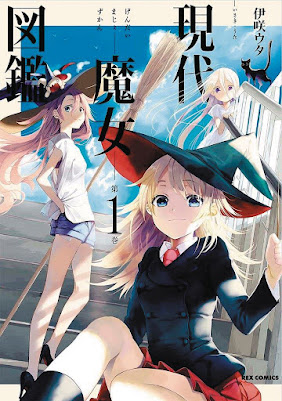
Generation Witch - volume 1

This is something I found while browsing my local library. You can find a lot of good stuff by browsing your local library. 

This book here is a slice-of-life fantasy about witches in modern life. In this setting, witches live openly in human society. To be a witch is just like having a natual talent for something; if you are born with it, then you can do it. Your parents might brag about you, and your peers might tease you, but that's it. No need to hide.

Does anyone reading this remember the time when it was a given that magical societies were hidden? Especially in modern day settings, it was expected for magical folk and creatures etc. to hide from the non-magicals. I wrote a blog post about that. Anyway, back to the review. 

This volumes contains four short stories featuring the lives of four different witches. They are unrelated, though the first three cameo in the story for the fourth. 

You know, it kind of reminds of Issac Asimov's "I, Robot". That's a strange comparison, isn't it? But let me explain. Issac Asimov wrote short stories to examine different aspects of The Three Laws of Robotics, different situations to show how they would work in detail. It's kind of like that here. What we have are four snap-shots of this magical modern society. 

In the first one, we glimpse something of a "normal" situation, a witch-in-training and her relationship with her younger sister. We take the perspective of the younger sister, who wants to have a study date without interruptions. The elder sister wants to help! Well, that particular witch is not quite "normal", but I imagine is close. The story is cute. 

In the second one, we see two witches. Thus, we have two perspectives. One is a girl who is basically shunned for embracing the image of a witch (in a "ignore that weirdo" sense instead of a "burn the unclean!" sense), and the other is a boy who doesn't like the fact that he has magical powers. Yes, males with magical powers are still called "witches" in this verse (Not "Witcher", ^_~), but it is more rare for this to happen. He has image problems himself. So, two witches with image problems work together on a small-scale quest using their magical abilities.  

This one has a lot of feels. It has more emotional heft than the first one because it has a weightier storyline.  There is more struggle. The first witch was an apprentice to the Great High Witch, and these two appear to be self-taught and raw ability.  So making the magic happen is part of the challenge. 

In the third one, well, I don't want to say much about the third one. It is an unfolding situation that shifts the reader's understanding. It is an experience. Saying much of anything can ruin that initial experience. It is a bittersweet experience. 

In the fourth one, we see a cultural celebration and a period of mourning. It is a most somber story. Having a girlfriend who can predict the future can lead to painful misunderstandings. All I can say about that one is that I am thankful for the epilogue joke to lighten the mood. 

I would appreciate more lore in the stories. Like the history of witch society, how magic is performed, how it is inherited through bloodlines, that sort of thing. It interests me. However, I understand why it is not included. This is a story about the lives of witches. It is not about their magic. The focus of the story is where it should be. 

The art is good. It is cute during light moments and it can also be stark in heavy moments. 

Trickster Eric Novels gives "Generation Witch - volume 1" an A+


Click here for my next book review: The Demon Prince of Momochi House - volume 1

Click here for my previous book review:   The Isolator - Realization of Absolute Solitude. manga volume 1

Brian Wilkerson is a independent novelist, freelance book reviewer, and writing advice blogger. He studied at the University of Minnesota and came away with bachelor degrees in English Literature and History (Classical Mediterranean Period concentration).

His fantasy series, Journey to Chaos, is currently available on Amazon as an ebook or paperback.